Conference Program
Three days in Bangkok, 19–21 November 2026 — four keynotes, seven paper sessions, the KGE-LLM and RDM-KG workshops, a poster session, and a closing panel.
Thursday, 19 November 2026
- 8:45 – 8:50 Greeting MessageDr. Thepchai Supnithi, NECTEC, AIAT
- 8:50 – 8:55 Report from the 21st iSAI-NLP RepresentativeProf. Dr. Peerapon Vateekul, Chula, AIAT
- 8:55 – 9:00 Report from the 21st KICSS RepresentativeProf. Dr. Takayuki Ito, Kyoto
- 9:00 – 9:05 Report from the 15th IJCKG RepresentativeDr. Chutiporn Anutariya, AIT
- 9:05 – 9:15 Announcement from the Local ChairAsst. Prof. Dr. Rachasak Somyanonthanakul, AIAT, Thammasat
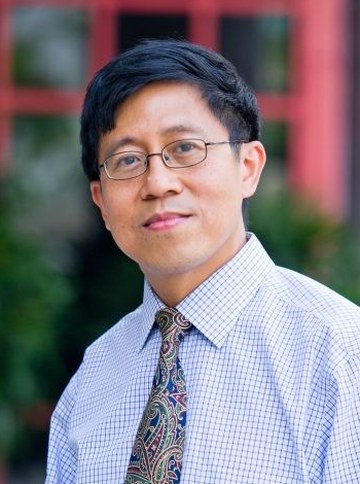
- From DL-LiteR to TGDs and Back: A Tight Graph-Based Characterisation
- Topology-Preserving Contrastive Learning for Taxonomy Induction in Thai Lexical Semantics
- Ontology-Guided Scenario Control Generation for GenAI in a Cybersecurity Serious Game
- Dynamic Curriculum Alignment Using Educational Knowledge Graphs: A Computational Audit Dashboard
- Opera: Structure-Conditioned Operators for Cross-Domain Link Prediction
- Beyond Vision-Language Models: Visual-Semantic Affect Graphs for Emotion Recognition in Artworks
- ThaiCGAT: A Parser-Free Graph Attention Network for Contextual Misinformation Detection in Thai
- PolicyKG: An Agentic LLM Pipeline for Translating Institutional Policies into SHACL Knowledge Graphs
- LLM-Guided Ontology-Driven Knowledge Graph Construction from Unstructured Text
- An LLM-Based Framework for Constructing RDF-star Knowledge Graphs from Renewable Energy Policy Documents for Stakeholder Opinion Analysis
- HELIX: Hybrid Entity Linking with Interactive eXpert-in-the-loop Annotation
Friday, 20 November 2026
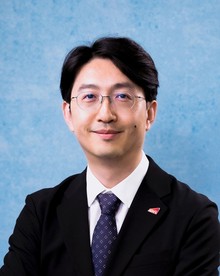
- COMPASS: Reliable and Auditable Question Answering for Digital Product Passports
- Beyond Embedded Time: Edge-Level Temporal Partitioning for Property Graph Retrieval
- SRAF: An Ontology-Grounded Knowledge Graph Framework for Auditing the Reproducibility of Machine-Learning Research
- A Triple-Based Method for Detecting Semantic Modifications in News Articles

- Adaptive Semantic-Causal Graph Integration for Robust Knowledge Graph RAG
- Grounding Extended Type-KoPL with KG-Structure Feedback: Anchor-Probe Feedback and Cypher-Informed Reranking
- LLM-based Progressive Triple Extraction from Infographics for Climate Change Ontology Construction
- A Citation-Grounded PDPA Ontology and QA Benchmark for Thai Legal Question Answering, with an Exploratory Graph-First RAG Study
- PENGUIN: AI-Assisted Cross-Platform Discovery of Research Records Using the Polar Science Knowledge Graph
- Pairing LLM4KG and KG4LLM: Framework-Specific Knowledge Graphs for Semantically Correct Repository-Level Code Generation
- Improving Retrieval Accuracy in Two Knowledge Graph RAG Frameworks via BM25 Integration
- An Intent–Background–Constraint Structured Representation for Underspecified Queries in Long-Term Conversational Memory Retrieval
- HierCache-RAG: Fast Retrieval-Level Caching for GraphRAG
- Burmese SpellGraph: Learning a Task-Specific Syllable Error Graph for Myanmar Spelling Correction
- Intent-KG Review: A Knowledge Graph for Region-Grounded Program Intent Analysis
- TRACE-OU-Bench: A Sequential Benchmark for Ontology Update Decisions from Financial Filing
- An LLM-Based Pipeline for Constructing Knowledge Graphs from Activity Records of Infectious Disease Patients
- NitiGraph: Open Thai Legal Knowledge Graph
Saturday, 21 November 2026
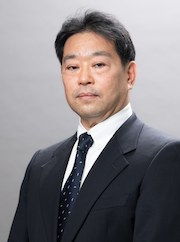
- Improving Attributed Triple Extraction with Data Augmentation and Model Collaboration
- Automated Result-Level Reproduction of Machine-Learning Papers with LLMs: A Knowledge-Graph Pipeline and a Taxonomy of Failure
- Toward Research Knowledge Graphs for AI Agents: Automatic Metadata Extraction from Research Notes Using Japanese Open LLMs and the Model Context Protocol — A Proof of Concept on GakuNin RDM
- Ontology-Guided Triple Extraction from Academic Papers: A Comparative Evaluation of Large Language Models
- Assessing Research Data Management Services Maturity in Thai Higher Education: A Qualitative Exploratory Study in Comparison with Japan
- PresentationDr. Yasuyuki Minamiyama, University of Tokyo
- Extra Session GreetingProf. Dr. Shoichiro Hara, Kyoto University
- DiscussionDr. Chikako Nagaoka, National Institute of Informatics
- DiscussionProf. Dr. Wanida Kanarkard, Khon Kaen University
- Panellistศ. นพ.ยง ภู่วรวรรณ, จุฬาลงกรณ์มหาวิทยาลัย
- Panellistรศ. ดร.ธนพล เพ็ญรัตน์, ผู้อำนวยการหน่วยภารกิจฐานข้อมูลและระบบดิจิทัล สกสว.
- Panellistคุณมาริยาท ตั้งมิตรเจริญ, ผู้อำนวยการกองระบบและบริหารข้อมูลเชิงยุทธศาสตร์ ด้านวิทยาศาสตร์ วิจัยและนวัตกรรม วช.
- Panellistรศ. ดร.พันธุ์ปิติ เปี่ยมสง่า, กรรมการสภามหาวิทยาลัยเกษตรศาสตร์ ภาควิชาวิศวกรรมคอมพิวเตอร์ คณะวิศวกรรมศาสตร์
- Moderatorศ. ดร.วิลาศ วูวงศ์, สมาคมปัญญาประดิษฐ์แห่งประเทศไทย
- Speakerผศ. ดร.วชิราภรณ์ คลังธนบูรณ์, คณะอักษรศาสตร์ จุฬาลงกรณ์มหาวิทยาลัย
Presentation instructions
Submit your presentation content before you register at the venue
All presenters in paper Sessions 1–7 must send their presentation through the Presentation Content Submission form before registering at the venue. This applies even if you plan to present from your own laptop.
Not required for poster or workshop presenters.
On the day of your talk
- 01
Submit your slides
Prepare your presentation as a PowerPoint or PDF file. If you present in paper Sessions 1–7, send it through the Presentation Content Submission form before registering at the venue. Check that all videos, animations and fonts display correctly.
- 02
Arrive 10 minutes early
Come to your session room at least 10 minutes before the session begins.
- 03
Check your slides
We recommend presenting from the session room computer with the slides you submitted. Check them before the session begins to make sure everything works properly.
- 04
Present, then take questions
Your presentation time depends on your paper type (see below), followed by 5 minutes for Q&A. The session chair will help manage timing and facilitate questions.
Time per paper type
- Full papers 30 minutes 25 min presentation · 5 min Q&A
- Short papers 20 minutes 15 min presentation · 5 min Q&A
- Workshop papers 20 minutes 15 min presentation · 5 min Q&A
A laptop will be provided in each presentation session. To ensure smooth transitions between presentations and minimise potential technical issues, we recommend that authors use the provided laptop whenever possible.
The program is subject to change. For questions, contact ijckg-2026@aiat.or.th.